
Suzhou Pharmaceutical Technology Co., Ltd. (China) supplies Zinc Sulfate API CAS 7733-02-0 for pharmaceutical B2B procurement — COA, MSDS, and technical documentation available on request.
Zinc Sulfate (ZnSO₄, CAS 7733-02-0) is an inorganic zinc salt produced by Suzhou Pharmaceutical Technology Co., Ltd. as pharmaceutical-grade bulk powder for parenteral nutrition, ophthalmic preparations, veterinary formulations, and agricultural applications. Available as anhydrous (CAS 7733-02-0), monohydrate (CAS 7446-19-7), and heptahydrate (CAS 7446-20-0) grades at ≥99.0% purity (HPLC). All orders include COA and MSDS. Export to South America, Europe, and worldwide. Inquire →
> Zinc Sulfate — Overview
Zinc sulfate is one of the most versatile inorganic zinc compounds in the pharmaceutical toolkit, serving simultaneously as an active pharmaceutical ingredient (ophthalmic astringent, zinc supplement) and a pharmaceutical excipient (trace-element source in parenteral formulas). Suzhou Pharmaceutical Technology Co., Ltd. produces zinc sulfate in all three commercial hydration states — anhydrous, monohydrate, and heptahydrate — allowing formulators to select the hydration level best suited to their manufacturing process and water-activity targets.
| Product Name | Zinc Sulfate |
| Structural Formula | 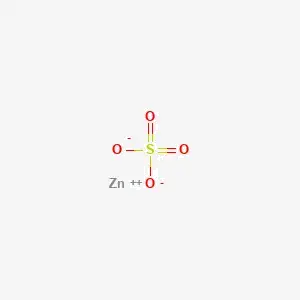 |
| Synonyms | Zinc sulphate; zinc vitriol; white vitriol; zinc(II) sulfate; ZnSO4; Zinkosite; Medizinc; Solvezinc; Zincomed; white copperas |
| CAS Number | 7733-02-0 (anhydrous); 7446-19-7 (monohydrate); 7446-20-0 (heptahydrate) |
| Molecular Formula | ZnSO₄ (anhydrous); ZnSO₄·H₂O (monohydrate); ZnSO₄·7H₂O (heptahydrate) |
| Molecular Weight | 161.47 g/mol (anhydrous); 179.47 g/mol (monohydrate); 287.54 g/mol (heptahydrate) |
| Purity | ≥99.0% (ICP-OES / titrimetric, pharma grade) |
| Appearance | White to off-white crystalline powder (anhydrous / monohydrate); colorless efflorescent crystals (heptahydrate) |
| Storage | Store in a cool, dry, well-ventilated area; protect from moisture and incompatible materials |
> Applications & Therapeutic Uses
Zinc sulfate occupies a unique cross-industry position: it is simultaneously regulated as an API (injectable zinc, ophthalmic), a nutritional supplement active, and an agricultural micronutrient. Understanding the correct hydrate form and purity specification for each end-use is critical to ensuring regulatory compliance and formulation performance.
Parenteral Nutrition — Injectable Zinc Trace Element
Zinc is the most abundant intracellular trace element and is essential for over 300 enzymatic reactions. In total parenteral nutrition (TPN), zinc is supplied as zinc sulfate injection, typically providing 3.2–6.4 mg elemental zinc per day for stable adult patients. Injectable-grade ZnSO₄ must meet USP 43 <1> or EP 10.0 specifications with heavy-metal limits and endotoxin testing.
Ophthalmic Preparations — Zinc Sulfate Eye Drops
Zinc Sulfate Ophthalmic Solution USP 0.25% is one of the oldest documented topical antiseptic and astringent formulations in ophthalmology, listed continuously in the United States Pharmacopeia since the early 20th century. The zinc ion precipitates proteins in the conjunctival epithelium, producing an astringent effect that reduces discharge and relieves mild conjunctival irritation. Compounding pharmacies in South America frequently prepare this formulation in-house using pharmaceutical-grade ZnSO₄ monohydrate, which offers better hygroscopic stability than the heptahydrate form under tropical climate conditions.
Topical Wound Healing and Dermatology
Zinc sulfate in topical formulations (0.1–0.5% w/w) promotes wound healing by supporting collagen synthesis, keratinocyte proliferation, and fibroblast activity. Zinc oxide and zinc sulfate are the two principal zinc sources in dermatological preparations; sulfate is preferred when a water-soluble, readily ionizable zinc source is required. Zinc sulfate solution (1–2%) is also applied as a topical astringent for hyperhidrosis, minor burns, and ulcerative skin conditions.
Veterinary Formulations — Footbath Solutions and Feed Supplements
Zinc sulfate footbath solutions (10% ZnSO₄·7H₂O w/v) are the standard preventive and therapeutic treatment for digital dermatitis and foot rot in cattle and sheep herds across South America. The zinc ion disrupts the cell membrane of Dichelobacter nodosus and Treponema spp., the primary pathogens in ovine foot rot. Veterinary product manufacturers in Argentina (SENASA-registered), Colombia (ICA-registered), and Chile (SAG-registered) are among the primary buyers of our bulk zinc sulfate for this application. In feed supplements, zinc sulfate monohydrate is preferred as a zinc source due to its higher elemental zinc content (36.4% Zn) and superior bioavailability versus zinc oxide in monogastric animals.
Agricultural Use — Foliar Micronutrient and Soil Amendment
Zinc deficiency is the most widespread micronutrient disorder in agricultural soils across Latin America, affecting soybean, maize, and citrus crops. Zinc sulfate heptahydrate (21–23% Zn content) is the most widely used zinc fertilizer globally, applied as foliar spray (0.2–0.5% ZnSO₄ solution) or soil amendment. Agricultural-grade material with Zn ≥35% (monohydrate, granular) is used in compound NPK fertilizer blending.
> Sourcing & Supply Chain
Suzhou Pharmaceutical Technology Co., Ltd. sources zinc sulfate from carefully audited Chinese manufacturers with established track records in pharmaceutical and food-grade production. Our technical team in Suzhou reviews and approves each batch before shipment, verifying purity against USP/EP specifications using ICP-OES and titrimetric methods.
- Export to Argentina, Colombia, Chile, Peru, Ecuador, Bolivia, Uruguay, and other South American markets
- Supply to Europe, Australia, Southeast Asia, and worldwide
- Lead time: 5–10 business days for standard grades (in-stock); 15–20 days for special grades or large volumes
- Available grades: pharmaceutical (USP/EP/BP), food-grade (FCC), agricultural, industrial
- Certificate of Analysis available for each batch prior to shipment
> Quality & Export Documentation
Pharmaceutical-grade zinc sulfate from our supply meets the following compendial specifications:
- USP 43 — Zinc Sulfate (anhydrous) and Zinc Sulfate Monohydrate / Heptahydrate
- EP 10.0 — Zinc Sulphate Monohydrate (0262) and Heptahydrate (0208)
- BP 2023 — Zinc Sulfate Monohydrate and Heptahydrate
- CP 2020 — Zinc Sulfate (硫酸锌)
- FCC 12 — Food Chemicals Codex for food/supplement grade
All orders include COA and MSDS. Certificate of Origin (COO) is available for orders exceeding 10 kg. Analytical test methods reported on COA include: Assay (titrimetric), Appearance (visual), Identification (IR, chemical), Lead / Arsenic / Cadmium (ICP-OES), Sulfate (gravimetric), pH (5% solution), Loss on drying (where applicable).
| Order Size | Documents Included |
| ≤10 kg (small batch / research) | COA + MSDS |
| >10 kg (commercial bulk) | COA + MSDS + COO |
> Packaging & Logistics
- 100 g, 500 g: heat-sealed HDPE bottle or double-wall polyethylene bag
- 1 kg, 5 kg: double-wall PE bag inside a sealed carton
- 25 kg: double-wall PE bag inside a fiber drum (standard export packaging)
- Custom packaging available for food/pharma labelling requirements
Zinc sulfate is classified as a non-hazardous material under IATA regulations and IMDG Code for shipping purposes (no dangerous goods surcharge). Standard shipping options: courier express (DHL/FedEx/UPS) 4–7 business days worldwide for ≤5 kg; air freight 5–10 days for 5–100 kg; sea freight 20–35 days for ≥100 kg. Import tariff HS code 2833.29 (zinc sulfate) — clients in South America should verify applicable customs duties and VAT with their customs broker.
> Pricing & Supply Terms
Zinc sulfate price is provided on inquiry. We do not publish list prices because the final price depends on hydration grade (anhydrous/monohydrate/heptahydrate), purity specification (industrial vs. pharma vs. food-grade), order quantity, destination country, and current raw-material market conditions.
- Minimum order: 100 g (evaluation/research sample); 1 kg (commercial).
- Sample policy: samples available at cost plus shipping; credit toward first commercial order.
- Payment: T/T (bank transfer). Flexible terms available for repeat orders.
- Pricing guidance: submit your target grade, quantity, and destination for a fast quotation.
> Frequently Asked Questions
What documents are included with a zinc sulfate order?
All zinc sulfate orders include COA (Certificate of Analysis) and MSDS (Material Safety Data Sheet). Orders over 10 kg include a Certificate of Origin (COO). The COA reports: assay/purity, appearance, identification, heavy metals (Pb, As, Cd via ICP-OES), pH of 5% solution, and hydration-state confirmation. Additional documents (Kosher, Halal, allergen statement) available on request.
What is the minimum order quantity for zinc sulfate CAS 7733-02-0?
Minimum order is 100 g for evaluation or research samples, and 1 kg for commercial use. There is no upper limit — we regularly fulfill orders from 1 kg up to multi-ton quantities. Contact us with your required grade and destination for a tailored quotation.
Do you export zinc sulfate to South America?
Yes. We export pharmaceutical and agricultural zinc sulfate regularly to Argentina, Colombia, Chile, Peru, Ecuador, Bolivia, and Uruguay. We are experienced in LATAM import documentation requirements and can provide Spanish-language documents (facturas comerciales, listas de empaque) as needed. Estimated transit: 5–8 business days (courier) or 20–30 days (sea freight).
What is the difference between zinc sulfate anhydrous, monohydrate, and heptahydrate for pharmaceutical use?
Anhydrous ZnSO₄ (CAS 7733-02-0, 40.5% Zn) is used where water content must be strictly controlled. Monohydrate ZnSO₄·H₂O (CAS 7446-19-7, 36.4% Zn) is the preferred pharmaceutical grade for oral and topical preparations due to stable hygroscopicity. Heptahydrate ZnSO₄·7H₂O (CAS 7446-20-0, 22.7% Zn) is the form typically listed in USP for injectable trace element concentrates and is also standard for agricultural use. Specifying the correct hydrate avoids potency errors in dose calculation.
Does your zinc sulfate meet USP and EP specifications?
Yes. Pharmaceutical-grade zinc sulfate from our supply is tested against USP 43 and EP 10.0 monograph specifications, covering assay (≥99.0%), heavy metals, identification, and appearance. COA is issued per batch with full analytical data. We can also supply to BP 2023 or CP 2020 specifications on request.
How is zinc sulfate used in ophthalmic formulations?
Zinc Sulfate Ophthalmic Solution USP (0.25% ZnSO₄) is a classic astringent and antiseptic for mild conjunctival irritation, listed in the United States Pharmacopeia. For compounding, pharmaceutical-grade ZnSO₄ monohydrate is dissolved in water for injection, pH-adjusted to 5.5–6.5 with boric acid/borax buffer, and sterilized by filtration (0.22 µm). Zinc concentration is confirmed by ICP-OES before release. Our monohydrate grade is suitable for compounding this formulation.
How is zinc sulfate used in parenteral nutrition (TPN)?
In TPN, zinc sulfate is the primary source of intravenous zinc, providing 3.2–12.2 mg elemental Zn/day depending on clinical indication. It is included in multi-trace-element concentrates or added as a separate zinc additive to the TPN admixture. Injectable-grade ZnSO₄ requires endotoxin testing (<0.5 EU/mL) in addition to chemical purity.
What is the shelf life of pharmaceutical-grade zinc sulfate?
Anhydrous and monohydrate grades: shelf life is 3 years when stored in sealed containers below 30°C and away from humidity. Heptahydrate: 2 years under the same conditions, as it is more susceptible to efflorescence (loss of water of crystallization) above 39°C. All batches include manufacture date and retest date on the COA label.
How is zinc sulfate shipped internationally?
Zinc sulfate is non-hazardous under IATA and IMDG, so no dangerous goods surcharge applies. Small quantities (≤5 kg) ship by courier (DHL/FedEx) in 4–7 business days worldwide. Larger orders travel by air freight (5–10 days) or sea freight (20–35 days to South American ports). Customs HS code: 2833.29. We provide full export documentation including commercial invoice, packing list, and COO for each shipment.
Can zinc sulfate be used in veterinary products and animal feed?
Yes. Zinc sulfate monohydrate is a registered zinc source in animal feed under EU Regulation 1831/2003 (Feed Additive E6) and is widely used in South American veterinary and feed applications. Footbath formulations (10% ZnSO₄ solution) are standard preventive treatment for digital dermatitis and foot rot in cattle and sheep in Argentina, Colombia, and Chile. We supply both pharmaceutical and feed-grade zinc sulfate for these applications.
What zinc sulfate forms are equivalent for pharmaceutical use — anhydrous, monohydrate, or heptahydrate?
We supply four purity tiers: Pharmaceutical (≥99.0%, USP/EP/BP tested, with COA); Food-grade (≥98.0%, FCC 12 compliant, suitable for dietary supplements); Feed-grade (≥98.0%, EU Reg. 1831/2003 compliant, Zn declared); Agricultural (≥98.0% or ≥35% Zn granular monohydrate for fertilizer blending). Contact us specifying your intended use so we can confirm the right grade and applicable documentation.
Do you supply zinc sulfate to pharmaceutical manufacturers in Argentina and Colombia?
Yes. We regularly supply zinc sulfate to pharmaceutical laboratories, compounding pharmacies, and nutritional supplement manufacturers in Argentina (ANMAT supply chain) and Colombia (INVIMA-registered manufacturers). We provide Spanish-language documents and have experience with regional import and quality documentation requirements. Typical lead time to Buenos Aires or Bogotá is 6–9 business days by courier.
> Related Products
- Magnesium Sulfate — CAS 7487-88-9 | Pharma & Agricultural Grade
- Copper Sulfate — CAS 7758-98-7 | Pharma & Agricultural Grade
> Request a Quote or Sample
Submit an inquiry for pharmaceutical-grade, food-grade, or agricultural zinc sulfate. Please specify: hydration form (anhydrous / monohydrate / heptahydrate), purity specification (USP, EP, FCC, or feed-grade), quantity required, and destination country. We respond within 24 hours on business days.
Contact: Info@fmyykj.com
Last reviewed: June 2026