
Suzhou Pharmaceutical Technology Co., Ltd. (China) supplies Xylitol USP/EP CAS 87-99-0 for pharmaceutical B2B procurement — COA, MSDS, and technical documentation available on request.
Xylitol (CAS 87-99-0) is a naturally occurring pentitol polyol produced by Suzhou Pharmaceutical Technology Co., Ltd. at ≥99.5% purity (HPLC) for pharmaceutical, food, and oral care applications. Available in powder and granular forms, compliant with USP 43, EP 10.0, BP 2023, and FCC 12. All orders include COA and MSDS. Export to South America, Europe, and worldwide. Inquire →
> Xylitol — Overview
Xylitol is a five-carbon sugar alcohol (pentitol) naturally found in birch bark, corn cobs, and many fruits and vegetables. Biochemically, it is a polyhydric alcohol with the molecular formula C₅H₁₂O₅, approximately 60–80% as sweet as sucrose but providing only 2.4 kcal/g (vs. 4 kcal/g for sucrose) because it is not metabolized via the typical glycolytic pathway. Most critically for oral health, common oral bacteria including Streptococcus mutans cannot ferment xylitol to lactic acid, eliminating the cariogenic pH drop that characterizes sucrose metabolism in the oral cavity.
| Product Name | Xylitol |
| Structural Formula | 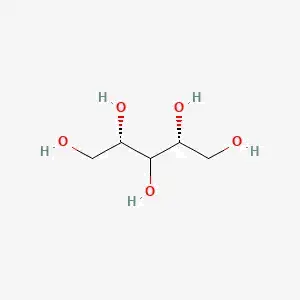 |
| Synonyms | Xylite; D-Xylitol; Klinit; Eutrit; Xylitolum; Kannit; Newtol; xylitol powder; birch sugar; wood sugar alcohol |
| CAS Number | 87-99-0 |
| Molecular Formula | C₅H₁₂O₅ |
| Molecular Weight | 152.15 g/mol |
| Purity | ≥99.5% (HPLC) |
| Appearance | White crystalline powder or granules; sweet taste; practically odorless |
| Storage | Store in a cool, dry, well-ventilated area below 25°C; protect from moisture |
> Applications
Xylitol’s dual status as a non-cariogenic sweetener and a medically active anti-caries agent makes it one of the most widely used functional excipients in modern pharmaceutical and oral care formulation. Its applications span from traditional sugar-free syrups to innovative probiotic chewing gums and nasal irrigation solutions.
Oral Care — Dental Caries Prevention
Xylitol’s anti-caries mechanism is the best-documented functional property among polyols. S. mutans uptakes xylitol via the PTS fructose transporter and phosphorylates it to xylitol-5-phosphate, which cannot be further metabolized, leading to energy futile cycling that depletes ATP in the bacterium and inhibits its growth. The FDA allows a qualified health claim: “Frequent consumption of foods high in sugars and starches promotes tooth decay. The sugar alcohols in [product] do not promote tooth decay.” Xylitol concentration in commercial oral care products ranges from 10–40% (chewing gum, mints, toothpaste) to 5–10% (mouthwash, dentifrice).
Pharmaceutical Formulations — Syrups, Tablets, and Nasal Products
In pharmaceutical manufacturing, xylitol functions as a bulk sweetener and humectant in sugar-free oral liquid preparations (syrups, suspensions, elixirs). Its high water solubility (>65 g/100 mL at 20°C) and pleasant cooling sensation (endothermic dissolution) make it ideal for pediatric medications where palatability directly affects compliance. In tablets, xylitol’s direct compressibility and lubricant properties allow it to be used as a filler-binder without wet granulation. Nasal xylitol solutions (3–5%) have been shown to reduce nasal bacterial colonization by improving mucociliary clearance — a property utilized in pediatric nasal irrigation products sold across Latin America.
Diabetic-Suitable Sweetener and Food Applications
With a glycemic index (GI) of 7–13 (vs. 100 for glucose), xylitol does not require insulin for cellular uptake, making it suitable for diabetic-suitable confectionery, dietary supplements, and clinical nutrition products. In South America, the demand for diabetic-suitable products is growing rapidly — Argentina and Colombia report diabetes prevalences of 8–11% of the adult population per IDF 2021 Atlas, driving demand for xylitol-containing oral care products, sugar-free chewing gum, and diabetic candies in the LATAM market. Xylitol is approved as food additive E967 in the EU and is listed in FDA’s GRAS Notice Inventory.
Parenteral Nutrition — Carbohydrate Substrate
In Germany and some Central European countries, xylitol was widely used as an insulin-independent carbohydrate source in parenteral nutrition until the 1980s, when high-dose adverse events (xylitol-associated oxalosis) led to discontinuation of high-concentration IV formulas. Current research focuses on low-concentration parenteral mixtures (≤0.5 g/kg/day) for specific patient populations with impaired glucose tolerance. Pharmaceutical-grade xylitol (USP/EP) is used in these specialized parenteral preparations.
> Sourcing & Supply Chain
Suzhou Pharmaceutical Technology Co., Ltd. sources xylitol from manufacturers with established production from corn-cob xylose (most common industrial route) or birch-bark hemicellulose. Each batch is tested for purity, heavy metals, and residue on ignition before release.
- Export to Argentina, Colombia, Chile, Peru, Ecuador, Bolivia, Uruguay, and other South American markets
- Supply to Europe, Australia, and worldwide
- Lead time: 7–12 business days for standard quantities; larger volumes may need 2–3 weeks
- Available forms: powder (fine, standard), granular (for direct compression); pharmaceutical, food, cosmetic grades
- Batch-specific COA prior to shipment
> Quality & Export Documentation
- USP 43 — Xylitol monograph (assay, appearance, specific rotation, microbial limits, heavy metals)
- EP 10.0 — Xylitol (1011; melting point 92–96°C, specific optical rotation, reducing sugars, heavy metals)
- BP 2023 — Xylitol
- FCC 12 — Food Chemicals Codex (food grade, 5-HMF limits)
- Halal / Kosher — available on request for food-grade batches
All orders include COA and MSDS. COO available for 25 kg packaging, pallet quantities, and commercial export orders. COA parameters: assay (HPLC, ≥99.5%), appearance, specific rotation [α]D, melting point (92–96°C), heavy metals (ICP-OES), reducing sugars (Cu reduction), residue on ignition, loss on drying, microbial total count.
| Order Size | Documents Included |
| Sample or evaluation quantity | COA + MSDS |
| 25 kg packaging / pallet quantity / production campaign | COA + MSDS + COO |
> Packaging & Logistics
- 100 g, 500 g: heat-sealed HDPE bag inside carton
- 1 kg, 5 kg: double-wall PE bag in sealed carton
- 25 kg: double-wall PE bag inside fiber drum (standard export)
Xylitol is non-hazardous under IATA and IMDG — no dangerous goods surcharge. Shipping: courier (DHL/FedEx) 4–7 days for ≤5 kg; air freight 5–10 days for 5–100 kg; sea freight 20–35 days to South American ports. HS code: 2905.43 (xylitol, mannitol, sorbitol group).
> Pricing & Supply Terms
Xylitol price is provided on inquiry, depending on grade (pharma/food), particle size (powder vs. granular), quantity, and destination. Submit your specification and target volume for a fast quotation.
- Minimum order: 100 g (sample); 1 kg (commercial).
- Payment: T/T (bank transfer). Flexible terms for repeat orders.
> Frequently Asked Questions
What documents are included with a xylitol order?
All orders include COA and MSDS. Orders for 25 kg packaging, pallet quantities, and commercial export orders include COO. COA parameters: assay (HPLC ≥99.5%), appearance, specific optical rotation, melting point (92–96°C), heavy metals (ICP-OES), reducing sugars, residue on ignition, loss on drying, and microbial count. Halal/Kosher certificates available for food-grade batches on request.
What is the minimum order quantity for xylitol CAS 87-99-0?
Minimum order is 100 g for samples and 1 kg for commercial use. We regularly fulfill orders from 1 kg to multi-ton quantities. Contact us with your grade, particle size, and destination for a quotation.
Do you export xylitol to South America?
Yes. We export pharmaceutical and food-grade xylitol to Argentina, Colombia, Chile, Peru, Ecuador, Bolivia, and Uruguay. We provide Spanish-language documents and are familiar with LATAM import documentation. Typical transit: 5–8 business days (courier) or 22–30 days (sea freight).
Does xylitol (birch sugar, also known as wood sugar or Xylite) meet USP and European Pharmacopoeia specifications?
Yes. Pharmaceutical-grade xylitol meets USP 43 and EP 10.0 (monograph 1011), including assay ≥99.5% (HPLC), melting point 92–96°C, specific optical rotation, heavy metals, and reducing sugars. We also supply to BP 2023 and FCC 12 specifications.
How does xylitol prevent tooth decay?
Xylitol prevents caries because S. mutans cannot ferment it to lactic acid. The bacterium uptakes xylitol via a fructose transporter, phosphorylates it to xylitol-5-phosphate — a non-fermentable dead-end metabolite — creating ATP-futile cycling that inhibits bacterial growth and reduces plaque formation. Regular exposure (5–10 g/day in 3–5 doses) over months leads to a measurable reduction in S. mutans counts and caries increment.
What is the glycemic index of xylitol — is it suitable for diabetic formulations?
Xylitol has a glycemic index of 7–13 (sucrose = 65, glucose = 100). It is absorbed slowly in the small intestine and partially fermented in the large intestine; only about 50% is metabolized via non-insulin-dependent pathways. This makes it suitable for diabetic-appropriate confectionery, oral care products, and dietary supplements. Always label products containing >10% xylitol with “may have a laxative effect if consumed in excess” per EU Reg. 1333/2008.
What is xylitol used for in oral liquid pharmaceutical formulations?
In sugar-free syrups and suspensions, xylitol acts as a bulk sweetener, humectant, and co-solvent. Typical use levels are 20–50% w/v in pediatric syrups. Its high water solubility (>65 g/100 mL at 20°C) and endothermic dissolution (cooling sensation) make it especially well-suited for pediatric liquid formulations where palatability drives compliance.
Is xylitol (Xylite, Klinit) safe for pets — are there toxicity concerns?
Xylitol is toxic to dogs. In canines, xylitol triggers a rapid and potent insulin release, causing hypoglycemia and potentially hepatotoxicity at doses as low as 0.1 g/kg body weight. This species-specific toxicity does not apply to humans, cats, or most other mammals. Products containing xylitol must carry appropriate labeling for households with dogs. Feline and equine toxicity is not established at typical food-use concentrations.
How is xylitol powder shipped internationally?
Xylitol is non-hazardous under IATA/IMDG — no dangerous goods surcharge. Small quantities (≤5 kg) ship by courier (DHL/FedEx) in 4–7 days. Larger orders by air (5–10 days) or sea freight (20–35 days to South American ports). HS code 2905.43 applies in most jurisdictions.
What is the difference between food-grade and pharmaceutical-grade xylitol?
Pharmaceutical-grade (USP/EP) adds optical rotation, tighter heavy metals (Pb ≤5 ppm ICP-OES), residue on ignition, and microbial testing (TAMC/TYMC) vs. food grade. Food-grade (FCC 12) focuses on assay, 5-HMF content, and lead. For use in oral liquid formulations or tablets, pharmaceutical grade is required; for confectionery, food grade is sufficient.
Do you supply xylitol to oral care and confectionery manufacturers in Colombia and Argentina?
Yes. We supply xylitol to chewing gum manufacturers, confectionery producers, oral care brands, and pharmaceutical compounding labs in Colombia (INVIMA supply chain) and Argentina (ANMAT/SENASA). Spanish-language certificates and invoices available. Typical delivery: 6–9 business days by courier to Bogotá or Buenos Aires.
What particle sizes of xylitol are available?
Three forms available: fine powder (D90 ≤200 µm, syrups/suspensions), standard powder (D90 ≤400 µm, tablet direct compression), and granular (1–3 mm, confectionery). Particle size distribution reported on COA on request. Contact us to confirm availability for your specific grade and particle size.
> Related Products
- Sorbitol — CAS 50-70-4 | Sugar Alcohol Humectant & Sweetener
- Sucralose — CAS 56038-13-2 | High-Intensity Non-Caloric Sweetener
- Sucrose — CAS 57-50-1 | Classic Sweetener & Tablet Filler
- Saccharin Sodium — CAS 128-44-9 | Intense Sweetener for Pharma
> Request a Quote or Sample
Submit an inquiry for pharmaceutical or food-grade xylitol. Please specify: grade (USP/EP or food/FCC), particle size (powder or granular), quantity, and destination. We respond within 24 hours on business days.
Contact: Info@fmyykj.com
Last reviewed: June 2026