
Suzhou Pharmaceutical Technology Co., Ltd. (China) supplies Sucralose CAS 56038-13-2 for pharmaceutical B2B procurement — COA, MSDS, and technical documentation available on request.
> Overview: Sucralose — CAS 56038-13-2
Suzhou Pharmaceutical Technology supplies sucralose, CAS 56038-13-2, pharmaceutical grade (≥98.0%), from qualified Chinese manufacturers. Sucralose is a trichlorogalactosucrose derivative: 600× sweeter than sucrose, non-caloric, non-cariogenic, and stable across a wide pH range (2–9) and temperature (up to 200 °C). Complies with USP, NF, EP (Ph. Eur.), BP, and FCC. Each lot includes COA, MSDS, HPLC assay, and optical rotation data. Minimum 1 kg samples; bulk supply to Argentina, Colombia, Chile, Peru, Ecuador, and across South America by sea freight from Shanghai or Tianjin.
> Technical Profile & Specifications
Sucralose is synthesized from sucrose by selective chlorination at the 4, 1’, and 6’ positions, replacing three hydroxyl groups with chlorine atoms. This modification renders it non-metabolizable (excreted unchanged), non-cariogenic, and 600× sweeter than sucrose. Its lack of a free reducing end eliminates Maillard browning with amino acids and makes it compatible with a broad range of pharmaceutical excipients.
| Property | Value |
|---|---|
| Product Name | Sucralose |
| Structural Formula | 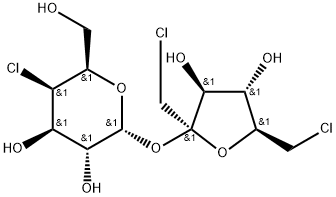 |
| CAS Number | 56038-13-2 |
| Molecular Formula | C₁₂H₁₉Cl₃O₈ |
| Molecular Weight | 397.6 g/mol |
| Purity (pharma grade) | ≥98.0% |
| Appearance | White to off-white crystalline powder |
| Specific Optical Rotation | [α]D²⁰ +84° to +87.5° (c=10, water) |
| Solubility in Water | ~280 g/L (20 °C); ~500 g/L (40 °C) |
| Water Content | ≤2.0% (Karl Fischer) |
| Residue on Ignition | ≤0.7% |
| Heavy Metals | ≤5 ppm |
| Sweetness Relative to Sucrose | 600× |
| Melting Point | 130–131 °C |
| Storage | ≤25 °C, RH ≤60%; sealed container, away from light |
| InChIKey | BAQAVOSOZGMPRM-QBMZZYIRSA-N |
> Regulatory Status: USP, NF, EP, BP, FCC
- USP/NF (United States Pharmacopeia / National Formulary): Sucralose monograph; HPLC assay ≥98.0%, optical rotation, water, residue on ignition, heavy metals, related substances. NF lists it as sweetening agent, flavor, and taste-masking agent.
- EP (European Pharmacopoeia): Ph. Eur. 10.0 Sucralose monograph; additional tests for 6-chloro-6-deoxyfructose and other impurities.
- BP (British Pharmacopoeia): Aligned with EP post-Brexit.
- FCC (Food Chemicals Codex): Food grade specifications; used in dietary supplements and functional food.
- E955: EU food additive number; approved in beverages, dairy products, and sugar-free confectionery.
- South America: Accepted by ANMAT (Argentina), INVIMA (Colombia), ISP (Chile), DIGEMID (Peru), and ARCSA (Ecuador) in registered oral pharmaceutical formulations.
> Pharmaceutical Applications
- Oral liquids & syrups: Primary non-caloric sweetener at 0.01–0.03% w/v. Unlike sucrose, sucralose does not support microbial growth and is inert in aqueous solution. Stable for full shelf life (24–36 months) across pH 2–9.
- Chewable tablets & ODTs: At 0.3–1.0 mg/tablet, sucralose provides intense sweetness without the caloric load of sugar alcohols. Compatible with MCC, DCPD, and mannitol bases. Often blended with acesulfame-K (1:1) for synergistic taste masking.
- Effervescent tablets: Heat-stable during manufacturing (granulation, blending); chemically stable in acidic pH of effervescent buffer systems.
- Pediatric formulations: Non-cariogenic, diabetic-safe, and acceptable to children. Used in paediatric antibiotics, vitamin syrups, and analgesic suspensions across Latin American markets.
- Nutraceutical powders & sachets: At 0.1–0.3% in powder sachets for oral rehydration, protein supplements, and botanical extracts.
> Food & Dietary Supplement Applications
- Sugar-free beverages & syrups: At 60–100 mg/L in soft drinks (replaces 60 g/L sucrose); pH and temperature stable during pasteurization.
- Dietary supplements: Flavored protein powders, pre-workout, vitamin gummies, and meal-replacement shakes. Acceptable for keto, diabetic, and weight-management products.
- Confectionery: Sugar-free chewing gums, hard candy, and chewable supplements; approved under E955 at maximum levels.
> Quality Assurance & Documentation
- Assay: HPLC (C18 column, UV 210 nm); sucralose ≥98.0% on dried basis
- Related substances: Individual impurity ≤0.1%; total impurities ≤0.5% (USP)
- Water: Karl Fischer titration; ≤2.0%
- Residue on ignition: ≤0.7% (USP method)
- Heavy metals: ICP-MS; ≤5 ppm total (as Pb)
- Optical rotation: [α]D²⁰ +84.0° to +87.5° (c=10, water, 20 °C)
- Microbial limits: TAMC ≤10³ CFU/g, TYMC ≤10² CFU/g, E. coli absent (USP ‹61›/‹62›)
Documentation with each shipment: COA, MSDS/SDS (GHS format), HPLC chromatogram, optical rotation report, and country-of-origin certificate. For ≤10 kg qualification orders, digital PDFs within 24 h of shipment; for >10 kg commercial orders, physical originals plus digital copies.
> Sourcing & Manufacturing Origin
China is the dominant global producer of sucralose, accounting for over 80% of world supply. Suzhou Pharmaceutical Technology sources from manufacturers with established USP/NF and EP production processes, HPLC-controlled synthesis, and ISO 9001 certification. Our qualified manufacturers export to pharmaceutical companies in North America, Europe, and Latin America. Sucralose manufacturing requires specialized chlorination chemistry; we only partner with facilities that operate dedicated production lines to prevent cross-contamination.
> Packaging, Storage & Shipping
- ≤1 kg: 500-g or 1-kg aluminum foil bags (double-sealed, nitrogen-flushed)
- 1–25 kg: 25-kg fiber drums with PE inner liner (heat-sealed)
- >25 kg: Multiple drums on pallets; bulk available on request
Storage: Keep in original sealed container at ≤25 °C, RH ≤60%, away from light. Sucralose is not hygroscopic but should be stored away from strong bases (alkaline hydrolysis at pH >9). Shelf life: 5 years in sealed packaging.
Shipping: Sea freight FCL/LCL from Shanghai or Tianjin to Buenos Aires, Callao (Lima), Valparaíso, Cartagena, and Guayaquil. HS code: 2940.00.90. Air freight for qualification samples ≤1 kg. Typical transit: 28–35 days to Buenos Aires; 22–28 days to Callao or Guayaquil.
> Pricing & MOQ
- Pharmaceutical grade ≥98.0%: 1–10 kg qualification USD 20–30/kg; 25–100 kg commercial USD 15–25/kg; 100–500 kg USD 10–18/kg
- Food grade FCC: 5–10% lower than pharma grade at same quantity
- Kosher & Halal certified lots: Available; request at order time
MOQ: 1 kg for qualification; 25 kg for repeat commercial orders. Price validity 30 days from quotation. All prices FOB Shanghai; CIF or DDP to South American ports on request.
> Frequently Asked Questions
What is the minimum order quantity for pharmaceutical sucralose — and what document package is included?
Two grades: Pharmaceutical ≥98.0% (USP/NF/EP/BP) and Food grade ≥98.0% (FCC). USP monograph requires HPLC assay, optical rotation ([α]D²⁰ +84° to +87.5°), water ≤2.0%, residue on ignition ≤0.7%, and heavy metals ≤5 ppm. All lots ship with COA, MSDS, and HPLC chromatogram.
What documents are included with each sucralose shipment?
COA (HPLC assay, water, residue on ignition, heavy metals, optical rotation, related substances), MSDS/SDS (GHS), and country-of-origin certificate. Factory attestation letters and DMF-support documents available on request. All documents in English; Spanish translations available for ANMAT, INVIMA, and ISP.
What is the CAS number 56038-13-2 and key identifiers for sucralose?
CAS 56038-13-2 identifies sucralose, a trichlorogalactosucrose derivative. PubChem CID 71485. Formula C12H19Cl3O8, MW 397.6 g/mol. InChIKey BAQAVOSOZGMPRM-QBMZZYIRSA-N. Optical rotation +84° to +87.5° (c=10, water). Known commercially as Splenda in consumer formats; supplied as bulk API for pharma/food use.
How sweet is sucralose compared to sucrose, aspartame, and stevia?
Sucralose is 600× sweeter than sucrose. Aspartame is 200× but heat-labile above 100 °C. Acesulfame-K is 200× with a slight metallic aftertaste. Steviol glycosides are 200–350×. Sucralose offers a clean sucrose-like profile, heat stability to 200 °C, and pH stability (2–9), making it the preferred high-intensity sweetener for taste-masking in pharma formulations.
Is sucralose (also known as Splenda) safe for diabetic patients?
Yes. Sucralose is not metabolized to glucose and produces no glycemic effect. ADI: 15 mg/kg/day (EFSA) and 5 mg/kg/day (WHO/JECFA). Safe for diabetic, pediatric, and weight-management formulations.
What use level is recommended for sucralose in oral pharmaceutical formulations?
Typical levels: 0.01–0.03% w/v in oral liquids; 0.3–1.0 mg/tablet in chewable tablets and ODTs; 0.1–0.3% in oral granules. Often blended with acesulfame-K (1:1) for synergistic sweetness enhancement of 30–40%, reducing total sweetener load while maintaining taste quality.
Is sucralose heat-stable enough for hot-melt extrusion and film coating?
Yes — sucralose is stable to 200 °C, compatible with hot-melt extrusion (100–180 °C), spray-dried dispersions, aqueous film coating, and direct compression. Unlike aspartame (degrades above 100 °C), sucralose maintains sweetness and purity after thermal processing. No Maillard reaction occurs since sucralose lacks a free reducing end.
What is the aqueous solubility of sucralose and how does it affect formulation?
Solubility: ~280 g/L at 20 °C, ~500 g/L at 40 °C. High water solubility allows use at low concentrations (0.01–0.03% w/v) without crystallization risk. Also soluble in ethanol, methanol, and propylene glycol. Log P = −1.0 confirms hydrophilicity; does not partition into lipophilic excipients or API matrices.
What packaging is available for bulk sucralose shipments to South America?
Standard: 25-kg fiber drums with PE inner liner (heat-sealed); 500-g or 1-kg aluminum foil bags for small orders. Sea freight FCL/LCL to Buenos Aires, Callao (Lima), Valparaíso, Cartagena, and Guayaquil. Lead time 3–5 weeks. DDP and CIF Incoterms available.
What is the minimum order quantity for pharmaceutical sucralose?
MOQ: 1 kg for qualification samples; 25 kg (1 drum) for commercial orders. Pharma grade ≥98.0% pricing: USD 15–25/kg at 25–100 kg (FOB Shanghai). Price validity 30 days. Contact our team for CIF pricing to your South American port.
How does sucralose compare to acesulfame-K and aspartame as excipients?
Sucralose (600×, heat stable, clean taste) outperforms aspartame (200×, heat-labile, phenylketonuria warning) in hot-process and shelf-stable formulations. Acesulfame-K (200×, heat stable) has a slightly bitter metallic aftertaste. The sucralose + acesulfame-K 1:1 blend achieves 30–40% synergistic sweetness enhancement, reducing total sweetener load in finished dosage forms.
Do you supply pharmaceutical sucralose to Argentina and Colombia?
Yes — primary markets. We ship to Buenos Aires (Exolgan) and Bogotá/Medellín (via Cartagena). Documentation compatible with ANMAT and INVIMA: COA, MSDS, factory attestation letter. DDP and CIF available. Transit 28–35 days from Shanghai or Tianjin.
> Related Pharmaceutical Sweeteners & Excipients
- Sucrose (CAS 57-50-1) — traditional sweetener, syrups, sugar coating, caloric
- Xylitol (CAS 87-99-0) — sugar alcohol, non-cariogenic, reduced calorie
- Succinic Acid (CAS 110-15-6) — pH modifier, buffer in oral formulations
> Request a Quote — Sucralose CAS 56038-13-2
Suzhou Pharmaceutical Technology supplies pharmaceutical-grade sucralose (CAS 56038-13-2, ≥98.0%) in quantities from 1 kg to multi-tonne lots, with full regulatory documentation. We serve importers, formulators, and manufacturers in Argentina, Colombia, Chile, Peru, Ecuador, Bolivia, Uruguay, and worldwide. Last reviewed: 2026-06-03